Omega-3 and Cancer: What the Evidence Says About Fish Oil During Treatment
Omega-3 fatty acids are among the most common supplements that people with cancer take, and the evidence on omega-3 and cancer is more nuanced than most headlines suggest. The strongest support is not for preventing cancer but for helping the body during treatment, and there's one important timing caution around chemotherapy that every patient should know.
Key Takeaways
◉ The strongest evidence for omega-3 in cancer is supportive: in patients on chemotherapy at risk of weight loss, omega-3 (EPA-rich, around 2 g/day) may help stabilize weight, appetite, and quality of life, and major nutrition guidelines (ESPEN) suggest considering it.
◉ Omega-3 appears to make muscle more responsive to protein intake, which supports its use alongside adequate protein for patients at risk of muscle loss.
◉ Effects on muscle mass specifically are inconsistent across trials; the most reproducible benefits are on body weight, appetite, and quality of life.
◉ Omega-3 is not a proven cancer treatment or prevention strategy; anti-tumor effects have been observed primarily in lab and animal studies.
◉ A fatty acid in fish oil can blunt certain chemotherapy drugs in laboratory studies; experts advise pausing fish oil from the day before through the day after chemotherapy, and avoiding oily fish like herring and mackerel for about 48 hours around treatment, especially with platinum-based drugs and irinotecan.
◉ The single most overlooked quality issue for omega-3 is freshness (oxidation/rancidity); choose products with third-party testing for potency, contaminants, and oxidation (TOTOX).
What omega-3 is, and why cancer patients ask about it
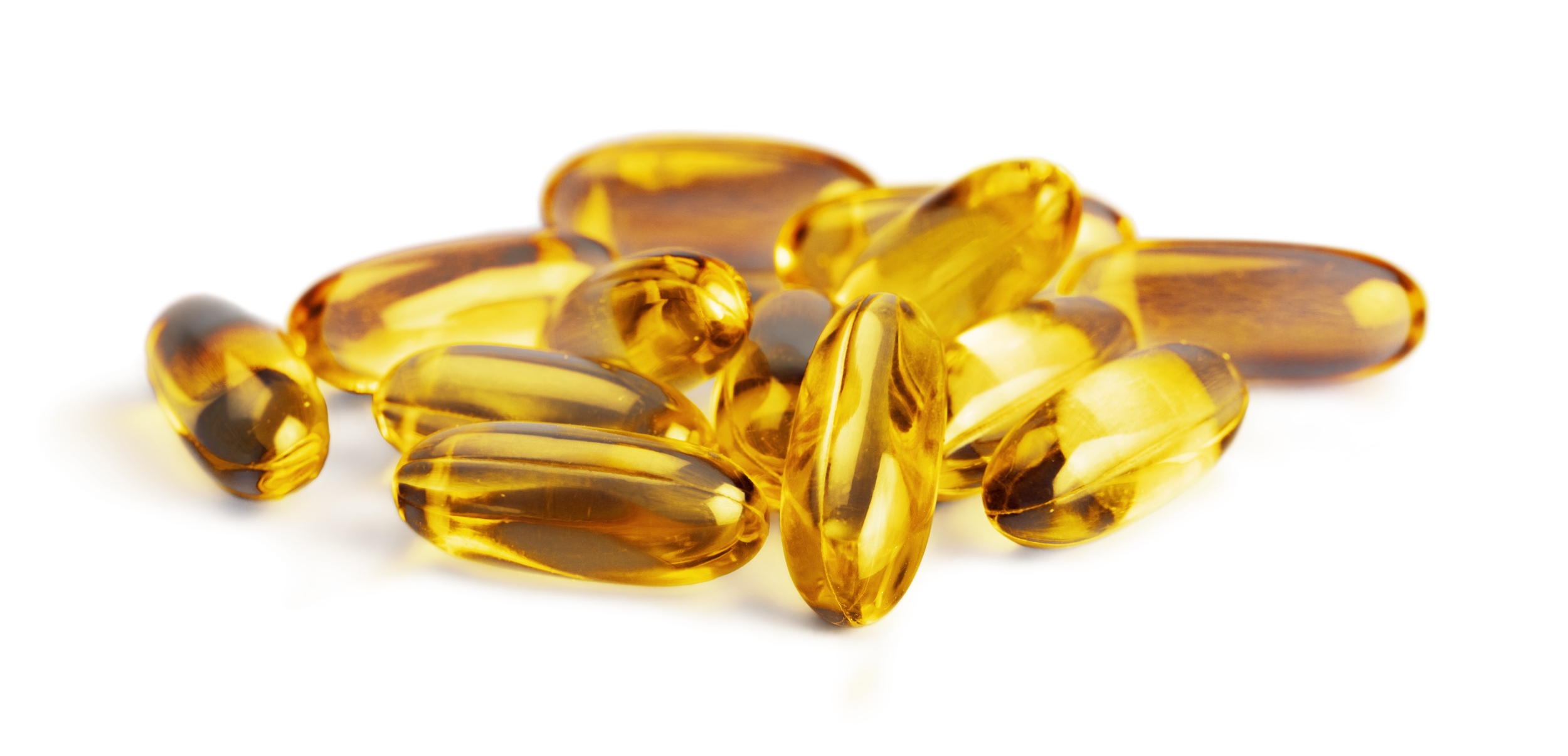
Omega-3 fatty acids, chiefly EPA (eicosapentaenoic acid) and DHA (docosahexaenoic acid), come from fish oil, krill oil, and algae (a vegetarian source higher in DHA). They are fatty acids, not proteins, and they work largely by lowering inflammation: once built into cell membranes, they shift the body's signaling toward molecules that help resolve inflammation rather than drive it.
The strongest evidence: weight, appetite, and quality of life during treatment
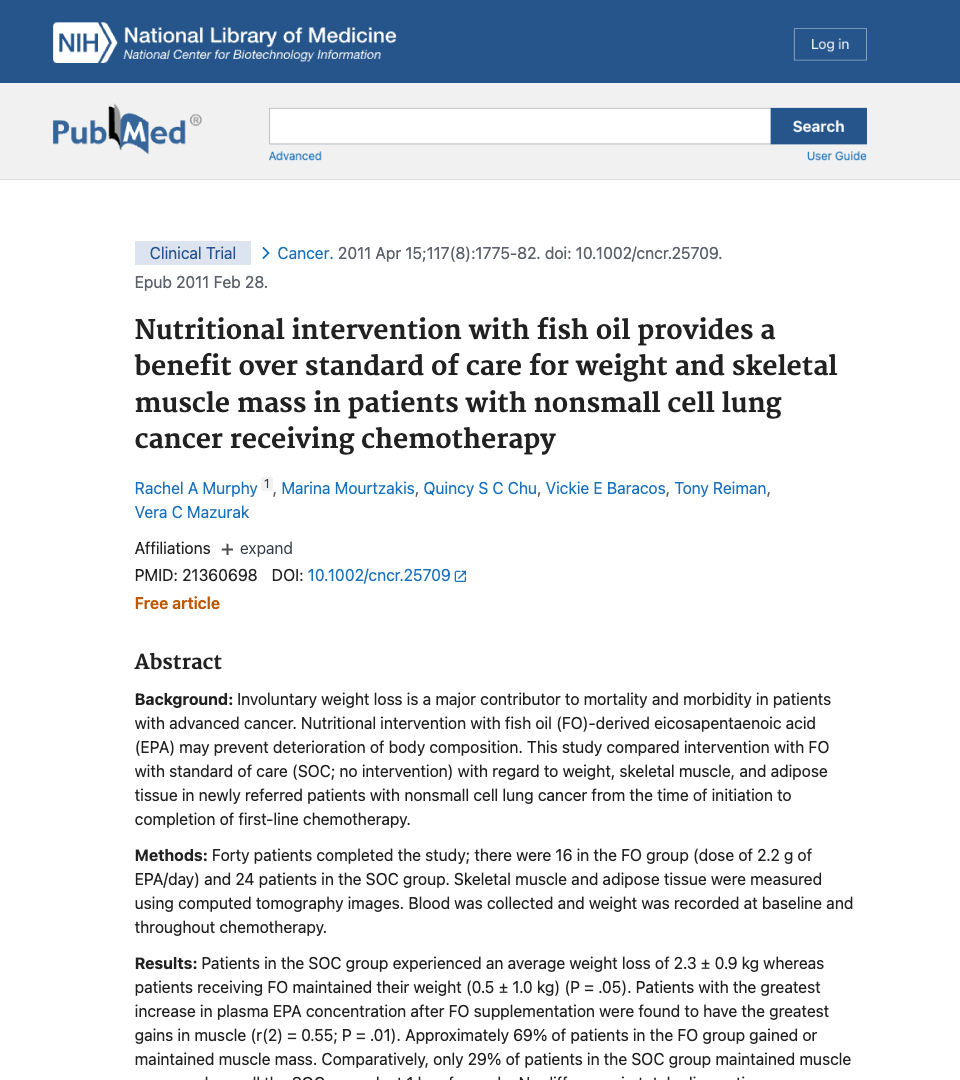
Involuntary weight and muscle loss, cancer cachexia, is one of the most damaging features of advanced cancer, and it's driven partly by inflammation. In a randomized study of patients with non-small cell lung cancer, about 2.2 g/day of EPA during first-line chemotherapy helped maintain weight and muscle, while the comparison group lost both (Murphy 2011).
When trials are pooled, the most consistent benefits appear on body weight, appetite, and quality of life, and in some analyses, survival. At the same time, effects on lean (muscle) mass specifically are inconsistent, and overall evidence quality is rated low to moderate. Even so, the European Society for Clinical Nutrition and Metabolism (ESPEN) suggests considering long-chain n-3 fatty acids or fish oil for patients with advanced cancer on chemotherapy who are losing weight (ESPEN 2021).
A related finding explains why omega-3 is sometimes paired with protein in nutrition products: research shows that omega-3 supplementation boosts the muscle's anabolic response to protein intake. making the muscle more responsive to the amino acids it receives (Smith 2011). This is a sound biological rationale. However, patients don't need a pre-mixed drink with a long ingredient list to get there. A clean, third-party-tested omega-3 supplement paired with adequate dietary or supplemental protein achieves the same purpose with more control over what else goes in.
There is also early evidence that omega-3 may reduce certain chemotherapy side effects, such as nerve pain with specific drugs. Promising, still being confirmed.
Can omega-3 fight or prevent cancer?
In the laboratory, omega-3s show anti-tumor activity, slowing cell growth, promoting cell death, and limiting the blood supply tumors need. That's promising biology, but candidly, it has been observed primarily in lab and animal studies. The clinical takeaway is to use omega-3 for supportive care during treatment, not with expectations of a cancer cure or prevention strategy.
The chemotherapy timing caution
Researchers identified a fatty acid found in fish oil and in oily fish (notably herring and mackerel), 16:4(n-3), that blunted certain chemotherapy drugs in mice; human blood levels of it spiked after fish oil intake (Daenen 2015). On that basis, centers such as Memorial Sloan Kettering and Dana-Farber advise pausing fish oil from the day before through the day after chemotherapy, and avoiding herring and mackerel for roughly 48 hours around treatment. The concern is strongest with platinum-based agents (cisplatin, carboplatin, oxaliplatin) and irinotecan. This evidence is still largely preclinical, so it argues for coordinating timing with your oncology team — not for abandoning omega-3 altogether.
High-dose immune caution
Very high intakes (above roughly 3 g/day of combined EPA and DHA) may suppress immune function. Most supportive-care use is lower; immunocompromised patients should generally keep supplemental EPA+DHA at or below 2 g/day unless their clinician advises otherwise.
Buying omega-3: freshness is the issue most people miss
The defining quality problem for omega-3 is oxidation, rancidity. Independent testing has repeatedly found a meaningful share of products already past acceptable freshness limits. Potency and label accuracy also vary, and concentration ranges widely (as little as a third of total oil is EPA+DHA in some products). Before buying, look for independent third-party testing or a manufacturer-published certificate of analysis from an accredited lab, covering three things: potency, contaminants (heavy metals, PCBs), and freshness/oxidation (TOTOX).
Three products that meet this bar, with publicly verifiable credentials: Viva Naturals Triple Strength Omega-3 (IFOS 5-star certified and Labdoor certified, both publish per-batch results); Carlson Maximum Omega 2,000 (IFOS 5-star certified, per-batch results published); and Garden of Life Dr. Formulated Advanced Omega (NSF certified and Non-GMO Project Verified). Product references reflect publicly available testing as of the date of recording and may change; verify credentials are current before purchasing.
Store omega-3 cool, dark, and, for liquids, refrigerated after opening.
Data at a glance
References
Murphy RA, Mourtzakis M, Chu QSC, Baracos VE, Reiman T, Mazurak VC. Nutritional intervention with fish oil provides a benefit over standard of care for weight and skeletal muscle mass in patients with nonsmall cell lung cancer receiving chemotherapy. Cancer. 2011;117(8):1775–1782. https://pubmed.ncbi.nlm.nih.gov/21360698/
Daenen LGM, Cirkel GA, Houthuijzen JM, et al. Increased plasma levels of chemoresistance-inducing fatty acid 16:4(n-3) after consumption of fish and fish oil. JAMA Oncol. 2015;1(3):350–358. https://jamanetwork.com/journals/jamaoncology/fullarticle/2212208
Muscaritoli M, Arends J, Bachmann P, et al. ESPEN practical guideline: Clinical Nutrition in cancer. Clin Nutr. 2021;40(5):2898–2913. https://www.clinicalnutritionjournal.com/article/S0261-5614(21)00079-0/fulltext
Smith GI, Atherton P, Reeds DN, et al. Dietary omega-3 fatty acid supplementation increases the rate of muscle protein synthesis in older adults: a randomized controlled trial. Am J Clin Nutr. 2011;93(2):402–412. https://pubmed.ncbi.nlm.nih.gov/21159787/
Manson JE, Cook NR, Lee IM, et al. Marine n-3 fatty acids and prevention of cardiovascular disease and cancer. N Engl J Med. 2019;380(1):23–32. https://pubmed.ncbi.nlm.nih.gov/30415637/
Memorial Sloan Kettering Cancer Center. About Herbs: Omega-3. https://www.mskcc.org/cancer-care/integrative-medicine/herbs/omega-3