Reishi Mushroom and Cancer: Evidence, Cautions, and What to Look For (2026 Review)
A nurse practitioner reviews the clinical evidence on reishi mushrooms for cancer patients. What works, what to watch for, and how to find a real product.
Reishi mushroom (Ganoderma lucidum) is one of the most-studied medicinal mushrooms in cancer nutrition, with clinical trial evidence going back more than two decades and traditional use stretching back two millennia. The evidence supports reishi's role as an adjunctive immune-modulating supplement during conventional cancer treatment, but the supplement category is plagued by quality problems, and a handful of specific cautions matter for patients in active treatment. This review covers what the peer-reviewed research actually shows, where reishi is not appropriate, and how to identify a product that delivers what the label claims.
Key Takeaways
◉ Reishi mushroom (Ganoderma lucidum) contains beta-glucans and ganoderic acids that have been studied for immune-modulating and anti-tumor effects.
◉ A 2012 Cochrane review of five randomized trials concluded that reishi may stimulate immune function when used alongside conventional cancer treatment.
◉ Quality varies dramatically across reishi products. Independent testing in 2026 found products labeled "reishi mushroom" that contained no measurable beta-glucan because they were made from mycelium grown on grain rather than from the fruiting body.
◉ High-dose reishi supplementation has been associated with rare cases of liver injury in published case reports.
◉ Patients being tested for invasive fungal infections should disclose reishi use to their care team, because 1,3-beta-D-glucan from mushrooms can interfere with the diagnostic assay.
◉ The most reliable reishi products list "mushroom" or "fruiting body" as the primary ingredient and are independently verified for both beta-glucan content and ganoderic acid content.
What reishi is and what's in it
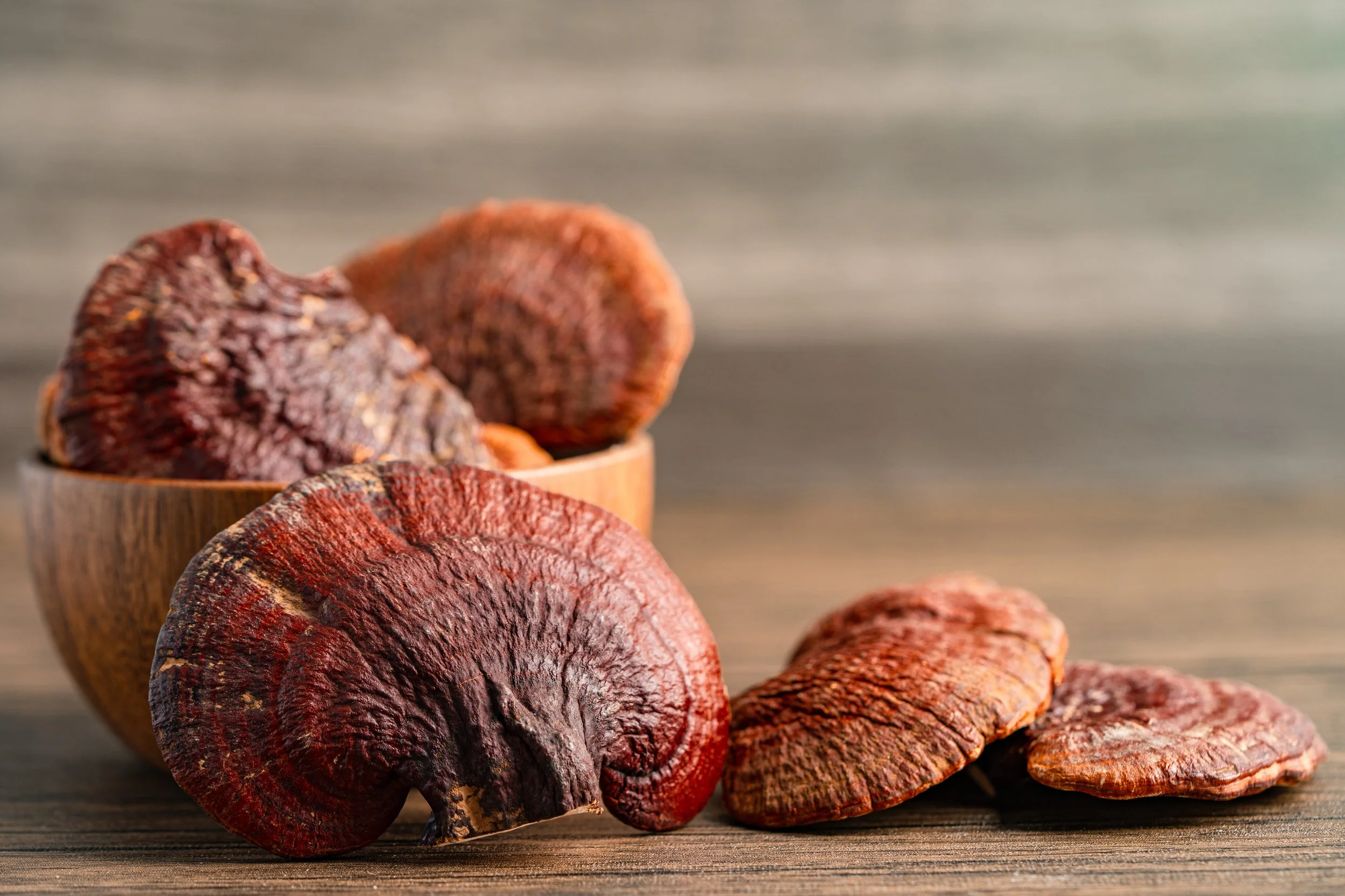
Reishi mushroom (Ganoderma lucidum, sometimes classified more recently as Ganoderma lingzhi) is an edible polypore mushroom that grows on hardwood trees in temperate and subtropical regions. In Traditional Chinese Medicine it has been used for over two thousand years under the name lingzhi, primarily as a tonic for vitality and longevity. Modern interest in reishi for cancer-relevant applications dates to the 1980s and has accelerated significantly over the past two decades.
Reishi contains roughly 400 biologically active compounds. Two classes are most relevant for cancer-adjacent applications:
Beta-glucans. Specifically, 1,3:1,6-beta-D-glucan, a complex polysaccharide concentrated in the mushroom's fruiting body. Beta-glucans are recognized by receptors on immune cells called dectin-1 and complement receptor 3, and they activate natural killer cells and macrophages.
Triterpenes, specifically ganoderic and ganoderenic acids. These compounds are concentrated in the fruiting body and require alcohol extraction (in addition to water extraction) to be present in meaningful amounts in a finished extract. In laboratory studies, ganoderic acids induce apoptosis, programmed cell death, in cancer cell lines, inhibit angiogenesis, and (in prostate cancer cells specifically) inhibit 5-alpha-reductase.
It matters which part of the mushroom is in the supplement. The fruiting body, the visible mushroom, contains the beta-glucan and ganoderic acid profiles that underpin most of the clinical research. The mycelium, the underground network that gives rise to the mushroom, has a different chemical profile and, when commercially grown on grain, often delivers more alpha-glucan from the grain substrate than beta-glucan from the fungus.
The clinical evidence in cancer patients
Cochrane review (2012)
The most rigorous synthesis of reishi clinical evidence is a 2012 Cochrane review by Jin and colleagues. The review evaluated five randomized controlled trials of reishi used alongside conventional cancer treatment. The reviewers concluded that reishi may help stimulate immune function when added to conventional anti-cancer therapy, while noting that the long-term studies needed to confirm survival or recurrence benefits have not yet been conducted.
Lung cancer
A randomized controlled trial of 1,800 mg of a standardized polysaccharide extract (Ganopoly) taken three times daily for three months in lung cancer patients found significant increases in natural killer cell activity in the treatment group, with no change in the placebo group. Sixty-five percent of patients receiving the extract reported improvements in quality of life, compared to 14 percent of those receiving placebo. Both this trial and a parallel study in patients with various advanced-stage cancers were funded by the extract manufacturer, which is a real limitation, but the methodology was randomized and placebo-controlled, and the findings have been repeatedly cited in subsequent reviews.
Colorectal adenomas
A study in 198 patients with colorectal adenomas, non-cancerous lesions that can progress to colorectal cancer, examined the effect of 1,500 mg per day of a water-soluble reishi mushroom extract taken for one year. The treatment group showed an average decrease in adenoma size of 1.4 mm and a decrease in adenoma number of 0.42. The control group, who received no treatment, showed average increases of 1.73 mm in size and 0.66 in number.
Prostate cancer
A small, non-blinded study in Japan examined men with non-metastasized prostate cancer who had experienced biochemical recurrence after primary treatment. Six months of reishi supplementation did not affect PSA or testosterone levels, though the study was small and uncontrolled. Laboratory work showing that ganoderic acids inhibit 5-alpha-reductase and prostate cancer cell growth has motivated continued research interest, but human evidence in prostate cancer remains preliminary.
Cancer-treatment cautions
The cautions for reishi that matter most for cancer patients are not classic drug interactions; reishi does not have well-documented interactions with specific chemotherapy agents in the way that some other natural substances do. Instead, the cautions concern (1) liver safety at high doses, (2) interference with diagnostic testing, (3) a tumor-marker signal in gastrointestinal cancer, and (4) a rare autoimmune flare risk.
Hepatotoxicity at high doses
Three published case reports, two from Asia and one from Japan, describe liver injury in patients taking powdered reishi at high doses. One was fatal. These appear to be idiosyncratic reactions and are rare given the population that uses reishi, but they are real, they are published, and Memorial Sloan Kettering's About Herbs database includes them in its safety summary. For cancer patients whose chemotherapy regimens themselves carry hepatotoxicity risk, and many do, the addition of a supplement with documented case reports of liver injury is a meaningful conversation to have with the treating oncologist.
Beta-glucan fungal infection assay interference
Immunocompromised cancer patients are often tested for invasive fungal infections using a serum assay that detects circulating 1,3-beta-D-glucan. The beta-glucans in reishi (and in other mushroom supplements) can produce false signals on this assay, complicating clinical decision-making. Patients on mushroom supplements should disclose this to their care team before any such testing.
CA72-4 tumor marker signal in GI cancers
A case series published in Integrative Cancer Therapies in 2014 reported elevated CA72-4 tumor marker levels in five patients with gastrointestinal cancer who were taking a reishi spore supplement. The marker normalized when the supplement was discontinued, and the patients showed no accompanying clinical change. For patients relying on tumor markers to monitor disease status, this kind of artificial fluctuation is worth knowing about.
HMGCR IMNM autoimmune flare
HMG-CoA reductase immune-mediated necrotizing myopathy is a rare autoimmune muscle disease most commonly triggered by statin medications. A 2022 case report described a flare in a 30-year-old woman after she began a mushroom complex supplement that contained reishi alongside other species. Naturally-occurring lovastatin compounds in mushrooms appear to be the trigger. Patients with a history of HMGCR IMNM should avoid mushroom supplements as a category.
Why reishi product quality varies so much
Reishi has the unusual distinction of being the only mushroom for which compendial methods of analysis (from USP and AOAC) currently exist. This means there is an industry-recognized way to test a reishi product for what's actually in it. Despite this, independent testing rounds repeatedly find products that don't deliver what the label suggests.
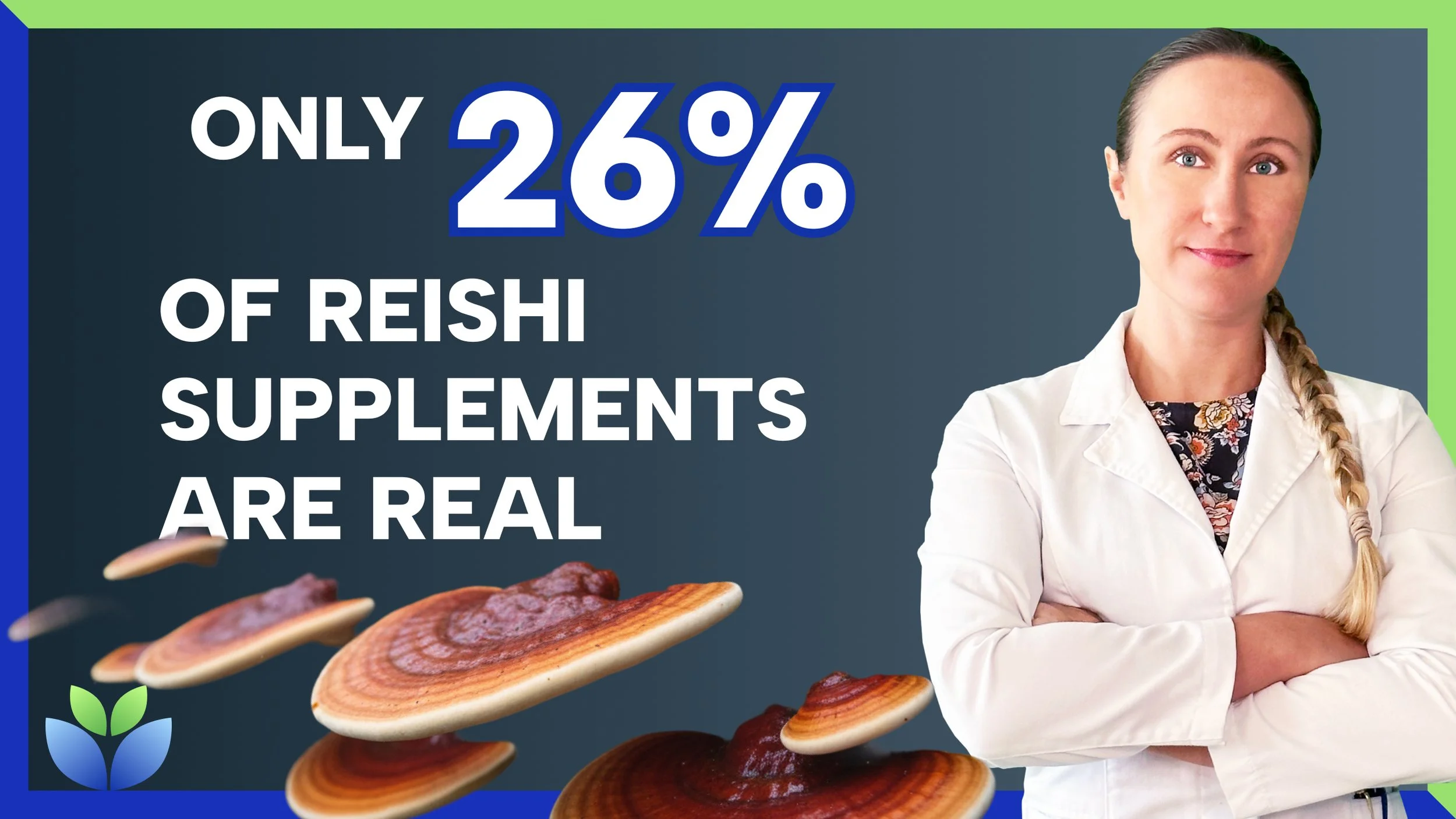
The core issue is the mycelium-versus-mushroom distinction. Commercial reishi mycelium is grown on a grain substrate, typically rice or oats. After mushroom harvest, the residual mycelium-and-grain mass is sometimes milled and sold as "mycelial biomass." Mycelial biomass contains significantly more alpha-glucan (the carbohydrate in the grain) than beta-glucan (the immune-active compound in the mushroom). A 2017 published analysis of 19 reishi supplements purchased online found that only 26 percent could be verified as containing genuine Ganoderma lucidum — most of the rest were mycelial biomass or other materials.
Independent testing in 2026 of seven popular reishi supplements found:
◉ One product labeled "reishi mushroom" contained no measurable beta-glucan; it was essentially mycelial biomass on fermented brown rice.
◉ One product labeled as a reishi extract delivered less than half of the beta-glucan expected for a fruiting-body extract, with the bulk of the carbohydrate content being alpha-glucan.
◉ Three out of seven products tested had extremely low ganoderic acid content (0.01% to 0.22%), suggesting they were produced using water extraction only and missed the triterpene compounds.
Data at a glance: how to read a reishi label
Examples with credible third-party verification
The products below are named because they meet two criteria: (1) the manufacturer makes a credible publicly-citable third-party credential available, and (2) independent testing supports the label claims for both beta-glucan and (where applicable) ganoderic acid content. Product references reflect publicly available verification at the time of recording and may change.
Real Mushrooms Reishi (capsules). Made from the extract of the fruiting body only, no mycelium. The manufacturer publishes a third-party Certificate of Analysis showing both beta-glucan and triterpene content; that documentation is available on the manufacturer's website.
Om Reishi Mushroom Powder. USDA Organic certified and Non-GMO Project Verified. A combination of mycelial biomass and fruiting body; the label is transparent about this composition. Independent testing has confirmed meaningful amounts of both beta-glucan and ganoderic acids despite the mycelial-biomass component.
Products that failed independent testing for either beta-glucan content, ganoderic acid content, or both, including several well-known brands, are not named here.
References
Jin X, Ruiz Beguerie J, Sze DM, Chan GC. Ganoderma lucidum (Reishi mushroom) for cancer treatment. Cochrane Database Syst Rev. 2012;6:CD007731. https://www.cochranelibrary.com/cdsr/doi/10.1002/14651858.CD007731.pub2/full
Gao Y, Tang W, Dai X, et al. Effects of water-soluble Ganoderma lucidum polysaccharides on the immune functions of patients with advanced lung cancer. J Med Food. 2005;8(2):159-168. https://www.dl.begellhouse.com/journals/708ae68d64b17c52,40f85691198060b9,29caf9ba3f525dbb.html
Oka S, Tanaka S, Yoshida S, et al. A water-soluble extract from culture medium of Ganoderma lucidum mycelia suppresses the development of colorectal adenomas. Hiroshima J Med Sci. 2010;59(1):1-6. https://pubmed.ncbi.nlm.nih.gov/20518254/
Yan PS, Shi Y, Yong T, Wang Y. Five cases of gastrointestinal cancer with elevated CA72-4 tumor marker during reishi spore supplementation. Integr Cancer Ther. 2014;13(3):245-251. https://openurl.ebsco.com/EPDB%3Agcd%3A9%3A11647945/detailv2?sid=ebsco%3Aplink%3Acrawler&id=ebsco%3Adoi%3A10.1177%2F1534735413510022&crl=f&link_origin=none
Wu DT, Deng Y, Chen LX, Zhao J, Bzhelyansky A, Li SP. Evaluation on quality consistency of Ganoderma lucidum dietary supplements collected in the United States. Sci Rep. 2017;7(1):7792. https://www.nature.com/articles/s41598-017-06336-3
Memorial Sloan Kettering Cancer Center. About Herbs: Reishi Mushroom. https://www.mskcc.org/cancer-care/integrative-medicine/herbs/reishi-mushroom
National Cancer Institute. PDQ Medicinal Mushrooms (Health Professional Version). https://www.cancer.gov/about-cancer/treatment/cam/hp/mushrooms-pdq
USDA Organic Integrity Database. https://organic.ams.usda.gov/integrity/