Protein Powder and Cancer: Why Muscle Matters, and How to Choose a Clean One
Protein powder and cancer is a pairing most people never think about, until treatment starts and eating becomes hard. During cancer treatment your protein needs actually rise, and the muscle you manage to protect may be one of the strongest predictors of how well you come through. This guide covers what the evidence shows, who should check with their care team first, and how to choose a protein powder that’s clean.
Key Takeaways
◉ Cancer treatment raises protein needs; guidelines recommend about 1.0–1.5 g of protein per kg of body weight per day.
◉ In a meta-analysis of 100 studies, low muscle mass was associated with meaningfully higher cancer mortality.
◉ In a randomized trial, whey protein isolate improved body composition and muscle strength and reduced chemotherapy side effects in advanced cancer patients.
◉ Unflavored whey protein isolate is consistently the lowest-contaminant category; plant-based, organic, and chocolate-flavored powders test highest for lead and cadmium.
◉ People with kidney impairment or on kidney-affecting treatments should confirm their protein target with their oncology team.
◉ The simplest strategy: buy a clean unflavored whey isolate and flavor it with whole foods.
Why muscle is more than strength in cancer
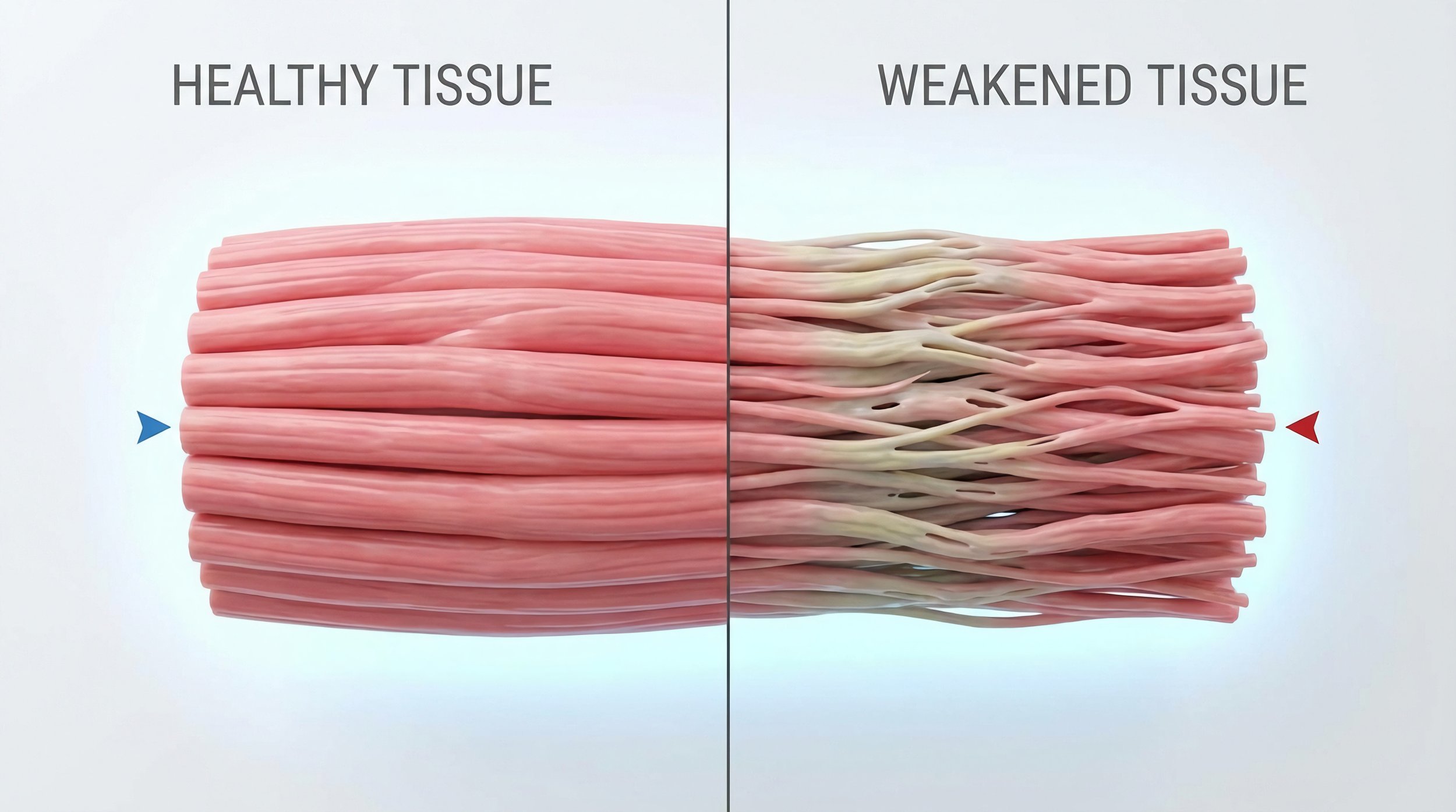
During treatment, the body shifts toward breaking tissue down, and skeletal muscle becomes an amino-acid reserve it draws on. Research consistently links low muscle mass to worse outcomes: a meta-analysis pooling 100 studies found sarcopenia associated with substantially higher cancer mortality, and a separate systematic review of solid tumors reached the same conclusion. Protecting muscle isn’t cosmetic; it tracks with survival, treatment tolerance, and recovery.
How much protein you actually need
Major cancer-nutrition guidelines (ESPEN) recommend 1.0–1.5 g/kg/day for a 154-lb adult, roughly 70–105 g daily. That’s difficult to hit through food alone when appetite and taste are altered, which is where a protein powder fills the gap. Encouragingly, muscle protein synthesis in cancer patients remains responsive to a good protein dose.
Why whey isolate is the most-studied choice
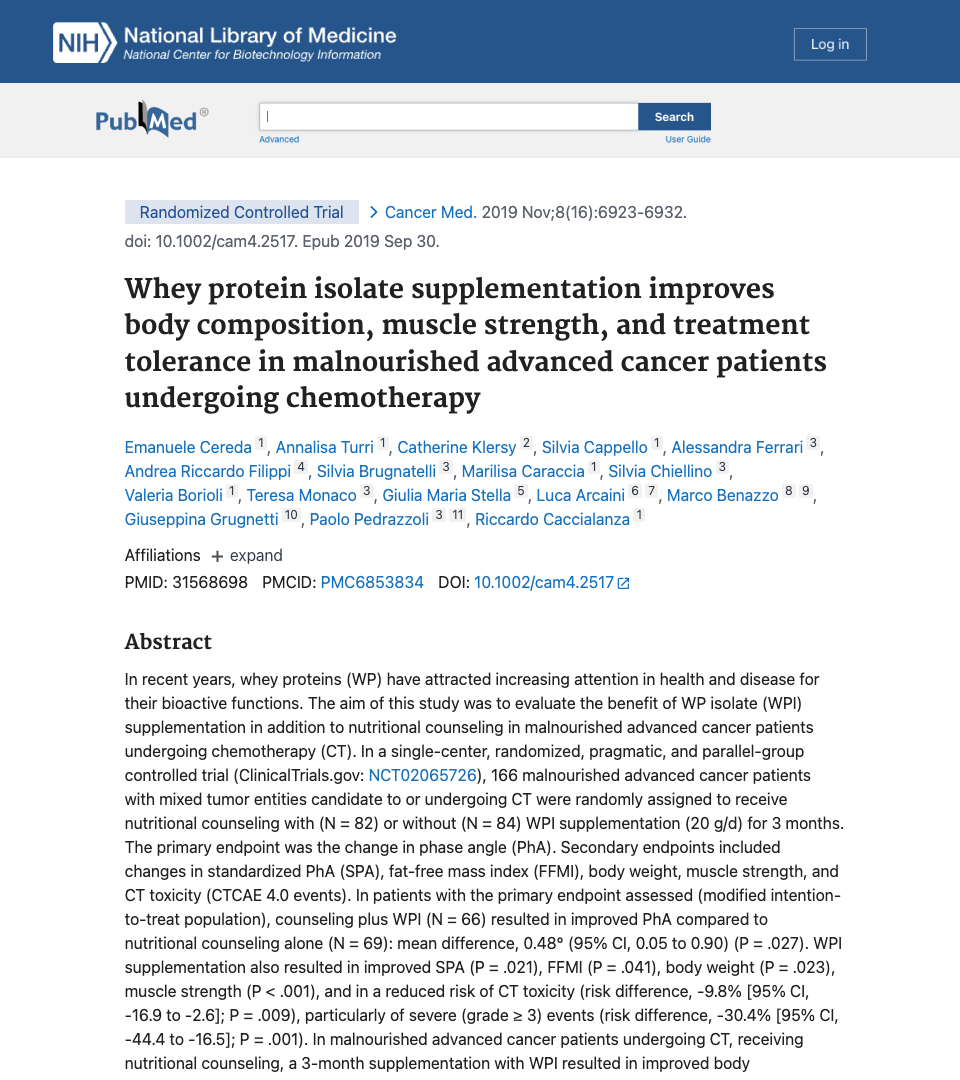
Whey protein isolate is a complete, highly digestible protein especially rich in leucine, the amino acid that signals muscle to build (via the mTOR pathway), and the isolate form is low in lactose. In a randomized trial of 166 advanced cancer patients on chemotherapy, adding 20 g/day of whey isolate improved body composition and muscle strength and reduced treatment toxicity. A separate controlled study showed a high-leucine formula measurably stimulated muscle-building in cancer patients.
Who should check with their team first?
The main oncology-relevant consideration is kidney function. With normal kidneys, protein in this range (and higher) is considered safe; with renal impairment or kidney-affecting treatment, targets may be lowered. This is a low-key conversation to have. Bring your number to your team, not a reason to avoid protein.
The contamination problem, and what to buy
Independent testing repeatedly finds lead and cadmium in protein powders. A 2025 analysis of 160 products found nearly half exceeded California’s Proposition 65 lead threshold, with plant-based (~3× more lead), organic (~3× more lead), and chocolate-flavored (~4× more lead, up to ~110× more cadmium than vanilla) faring worst; Consumer Reports reached similar conclusions. That threshold is stricter than the federal reference level, but for someone in active treatment, choosing the lowest-contaminant option is a sensible safeguard. Unflavored whey isolate is consistently the lowest-metal category. When choosing, look for independent third-party testing (USP, NSF, Labdoor, or an accredited-lab COA) for both potency and contaminants. Two clean, independently verified options: Isopure Zero Carb (unflavored), which appears on independent purity testing, and Naked Whey (unflavored), a single-ingredient grass-fed whey that is NSF certified for purity and contaminants. Isolates like Isopure are gentler if dairy bothers you; a single-ingredient whey like Naked keeps the label as short as possible.
Flavor it yourself with whole foods
If unflavored isn’t appealing, blend in whole foods. Cocoa adds chocolate flavor, and in laboratory studies the procyanidins in cocoa have shown anti-cancer activity in cells early, preclinical science, not a treatment. If you take the cocoa route, see our companion episode on cacao, which covers how to navigate heavy metals in cocoa products. Looking for a different flavor? Have fun with ingredients like vanilla, berries, or coffee; half a blended avocado adds creaminess and healthy fats.
Data at a glance
References
1. Sarcopenia and mortality in cancer: a meta-analysis. Osteoporos Sarcopenia. 2021. https://pmc.ncbi.nlm.nih.gov/articles/PMC8088991/
2. Shachar SS, et al. Prognostic value of sarcopenia in adults with solid tumours. Eur J Cancer. 2016. https://pubmed.ncbi.nlm.nih.gov/26882087/
3. Cereda E, et al. Whey protein isolate supplementation in malnourished advanced cancer patients undergoing chemotherapy. Cancer Med. 2019. https://pubmed.ncbi.nlm.nih.gov/31568698/
4. Deutz NE, et al. Muscle protein synthesis in cancer patients stimulated by a specially formulated medical food. Clin Nutr. 2011. https://pubmed.ncbi.nlm.nih.gov/21683485/
5. Arends J, et al. ESPEN guidelines on nutrition in cancer patients. Clin Nutr. 2017. https://doi.org/10.1016/j.clnu.2016.07.015
6. Muscaritoli M, et al. ESPEN practical guideline: Clinical Nutrition in cancer. Clin Nutr. 2021. https://www.clinicalnutritionjournal.com/article/S0261-5614(21)00079-0/fulltext
7. Clean Label Project. Protein powder heavy-metals study. 2025. https://cleanlabelproject.org/protein-study/
8. Consumer Reports. Protein Powders and Shakes Contain High Levels of Lead. 2025–26. https://www.consumerreports.org/lead/protein-powders-and-shakes-contain-high-levels-of-lead-a4206364640/
9. Bandara SB, et al. Human health risk assessment of heavy metals in protein powders. Toxicol Rep. 2020. https://pubmed.ncbi.nlm.nih.gov/33005567/
10. Procyanidins as potential anticancer agents. Med Oncol. 2025 (preclinical review). https://pubmed.ncbi.nlm.nih.gov/40500471/