The GLP-1 Lesson for Cancer Nutrition: Protein, Muscle, and Making Every Bite Count
Protein and muscle during cancer treatment may be the most overlooked piece of the nutrition picture, and a conversation happening elsewhere in medicine just made it impossible to ignore. As GLP-1 weight-loss medications surge in popularity, doctors are warning that a large share of the weight people lose is muscle, not fat. The same principle applies, with higher stakes, to anyone whose appetite drops during cancer treatment.
Key Takeaways
◉ In the main semaglutide trial, roughly 40% of the weight people lost on the medication was lean mass, which is why protein and strength training dominate the GLP-1 conversation.
◉ Low muscle mass is associated with poorer survival across many cancer types in a meta-analysis of about 100 studies, an association that argues for protecting the muscle you have.
◉ ESPEN guidelines recommend that people with cancer aim for 1.0–1.5 g of protein per kg of body weight daily (about half a gram per pound), higher than typical adult intake.
◉ Targeted nutrition is a cornerstone of preventing cachexia and malnutrition, though cachexia itself is medically complex and managed by the oncology team.
◉ Independent and peer-reviewed testing repeatedly finds detectable lead in many protein powders; a plain, single-ingredient whey isolate and third-party testing are practical safeguards.
Why Muscle Matters During Cancer Treatment
Muscle is functional reserve: strength to climb stairs, balance to stay steady, and the physical capacity to get through demanding treatment days. Research underscores its importance: a meta-analysis of roughly 100 cohort studies found that low muscle mass was associated with higher all-cause mortality in people with cancer. That is an association rather than proof that gaining muscle changes survival, but it makes a strong case for protecting what you have.
During treatment, muscle is squeezed from two directions. Intake falls because of nausea, taste changes, mouth sores, fatigue, and early satiety. And in some patients, cancer drives cachexia, a wasting process fueled by inflammation and metabolic change, distinct from ordinary weight loss. Cachexia is medically complex and is managed by the oncology team, but targeted nutrition is a cornerstone of preventing cachexia and malnutrition in the first place.
How Much Protein, and From Where
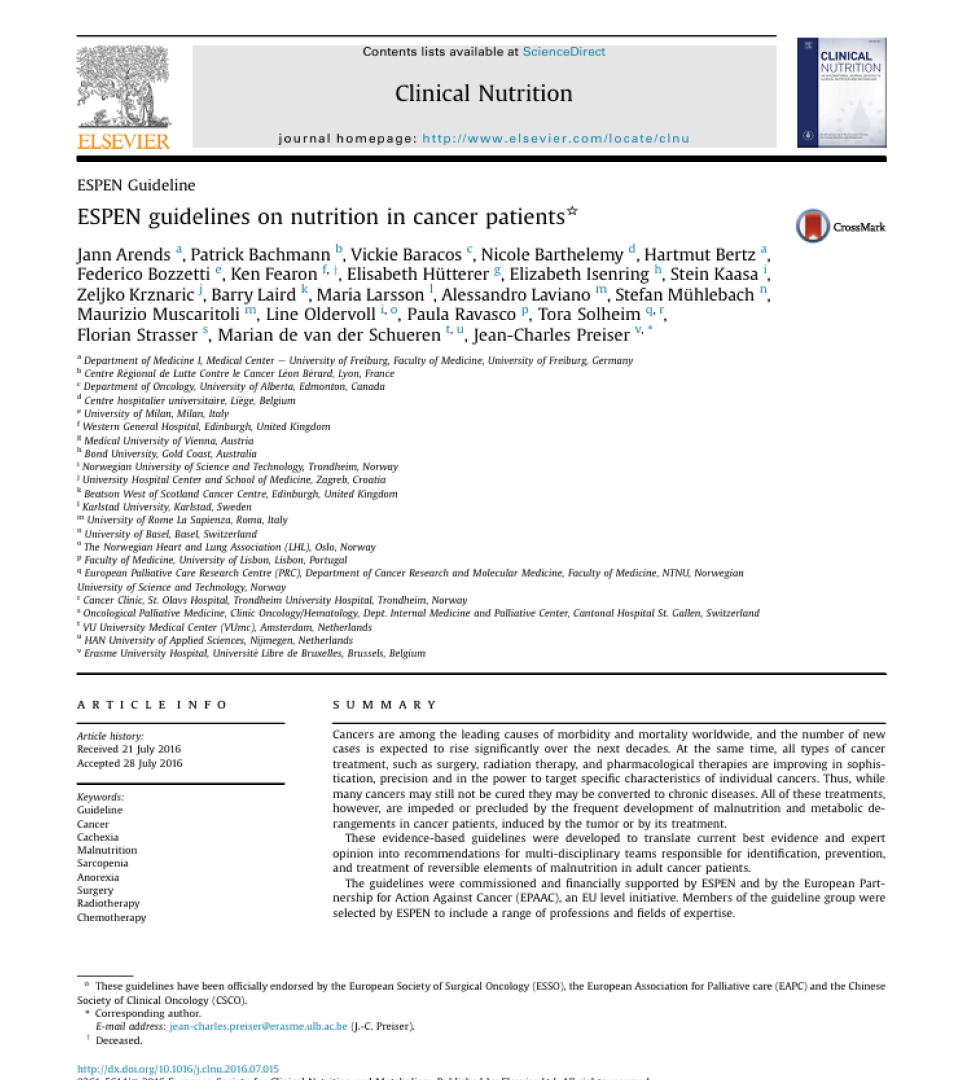
ESPEN guidelines recommend that people with cancer target 1.0–1.5 g of protein per kilogram of body weight per day, for those in the U.S., roughly half a gram per pound, to help maintain or restore lean mass. That is more than the general adult reference. The right number is individual, especially for anyone with reduced kidney function, and should be set with the care team and a dietitian.
Food-first sources include Greek yogurt, eggs, fish, poultry, tofu, and lentils, plus two standout plant proteins, lupini beans and edamame, that also deliver fiber. For omega-3-rich fish, salmon, sardines, and trout are strong choices; leaner options like tilapia and poultry work well when you simply want easy, gentle protein. When weight is dropping, calorie density matters as much as protein: olive oil, nut butters, avocado, full-fat dairy, and fortified soups make each bite count.
When appetite is low, hitting a protein target from food alone is hard, and a high-protein oral supplement can close the gap, one randomized trial found it helped most patients reach the recommended intake during treatment. Some nutrition shakes also pair protein with omega-3 fats, which have been studied alongside protein for helping maintain weight and lean mass during treatment; any supplement, omega-3 included, should be approved by your care team first.
Movement is protein's partner. Guidelines conclude that aerobic and resistance exercise during active treatment is safe for most people when individualized, supports strength and function, and that the key is to avoid inactivity, always with the team's clearance.
Make It Personal: Your Care Team's Call
None of this is one-size-fits-all. Your protein target depends on your body and your treatment and shifts if you have kidney concerns. Any supplement should get the green light from your team first. And rapid weight loss or noticeably new weakness is a medical conversation, not a do-it-yourself diet change. Catching these things early is exactly where good nutrition does its best work.
Protein Powders: What the Testing Shows
Many people lean on shakes when food is hard, so quality matters. Independent testing, including peer-reviewed analysis, has repeatedly found detectable heavy metals, especially lead, in a large share of protein powders. Plant-based and organic powders tended to test higher for lead than whey; there is no federal limit for these metals in supplements; and experts disagree about the actual risk at normal serving sizes. A separate issue, "nitrogen spiking," can make a powder appear higher in protein than it truly delivers.
The practical safeguard is independent third-party testing: USP, NSF, NSF Certified for Sport, Informed Sport, or a manufacturer's published Certificate of Analysis from an accredited lab, checking for both potency and contaminants. The simplest move is a plain, unflavored whey isolate with a single ingredient on the label: no dyes, no synthetic additions, just protein. (The FDA revoked authorization for Red Dye No. 3 in 2025.) Our companion article on protein reviews the topic in depth and highlights a few products that tested clean.
Making Every Bite Count
When you're eating less, the goal is to make every bite count: lead with protein, add easy calories if your weight is dropping, keep moving if your team says it's safe, and lean on a well-tested shake when food is hard. Bring these choices to your care team, who know your treatment and can tell you how your situation changes the math.
Data at a Glance
References
1. Sarcopenia and mortality in cancer: a meta-analysis. Clin Nutr ESPEN. https://www.sciencedirect.com/science/article/pii/S240552552100008X
2. Low muscle mass, malnutrition, sarcopenia, and survival in adults with cancer (UK Biobank). https://www.ncbi.nlm.nih.gov/pmc/articles/PMC10401543/
3. Arends J, et al. ESPEN guidelines on nutrition in cancer patients. Clin Nutr. https://www.espen.org/files/ESPEN-Guidelines/ESPEN_guidelines_on_nutrition_in_cancer_patients.pdf
4. High-protein oral nutritional supplements during anti-cancer treatment (RCT). https://pubmed.ncbi.nlm.nih.gov/38140289/
5. Omega-3 (EPA) with protein nutritional supplements and body composition in cancer (meta-analysis). https://pmc.ncbi.nlm.nih.gov/articles/PMC11363039/
6. Exercise guidelines for cancer survivors (ACSM Roundtable). https://pmc.ncbi.nlm.nih.gov/articles/PMC8576825/
7. Heavy-metal content in protein powders (peer-reviewed analysis). https://www.ncbi.nlm.nih.gov/pmc/articles/PMC12286494/
8. FDA. FD&C Red No. 3. https://www.fda.gov/industry/color-additives/fdc-red-no-3
9. GLP-1 lean-mass loss (Endocrine Society, 2025). https://www.endocrine.org/news-and-advocacy/news-room/endo-annual-meeting/endo-2025-press-releases/haines-press-release