Food Dye Bans: What the Science Actually Says, and What It Means If You’re Fighting Cancer
If you’re fighting cancer, you’ve already learned to read every label, as it matters. So when the FDA moves to pull a whole class of synthetic colors out of the food supply, thirty states start passing their own bans, and one dye gets formally revoked over cancer, you deserve a clear read on what’s actually going on, not the cable-news version, and not a political talking point.
The honest problem right now is that the coverage is muddying the science rather than clarifying it. Headlines swing between “these are completely harmless” and “they’re poisoning us,” and neither matches the evidence. Here’s the straight version, with the sources, so you can make your own call.
Key Takeaways
◉ The strongest human evidence on synthetic food dyes is about children’s behavior, not cancer: a 2021 OEHHA review of 27 mostly double-blind trials linked dyes to hyperactivity in some children.
◉ In mice, chronic daily Red 40 exposure disrupted the gut barrier, raised gut serotonin, shifted the microbiome, and increased colitis susceptibility, but intermittent, more human-like exposure did not.
◉ Direct cancer evidence is limited but concerning: Red 40 damaged DNA in human colon cells and mice; the link to early-onset colorectal cancer is an explicit hypothesis, not proof.
◉ Red 3 was revoked under the Delaney Clause because it caused thyroid tumors in male rats at high doses, a legal trigger, even though FDA states the rat mechanism doesn’t apply to humans.
◉ Synthetic dyes have no nutritional benefit, and a bright synthetic color is a reliable marker of ultra-processed food, which is itself linked, via obesity, to higher cancer risk (IARC).
◉ The practical move isn’t fear of one molecule; it’s using the dye as an easy on-ramp to a less processed, plant-forward pattern, the place where the strong evidence actually lives.
What’s actually happening
In April 2025, the FDA and the Department of Health and Human Services announced a plan to phase out six petroleum-based dyes, Red 40, Yellow 5, Yellow 6, Blue 1, Blue 2, and Green 3, from the food supply by the end of 2027. The detail that usually gets dropped: that phase-out is largely voluntary, an understanding with the food industry rather than a hard federal rule.
Only one dye has actually been formally revoked: Red 3. Meanwhile, the states didn’t wait; roughly thirty have proposed or passed their own legislation, although some, such as West Virginia’s, are tied up in court.
So when you hear “banned,” the reality is that these dyes likely won’t disappear from shelves any time soon. Which raises the real question: why all the action in the first place?
The strongest evidence is about behavior, not cancer
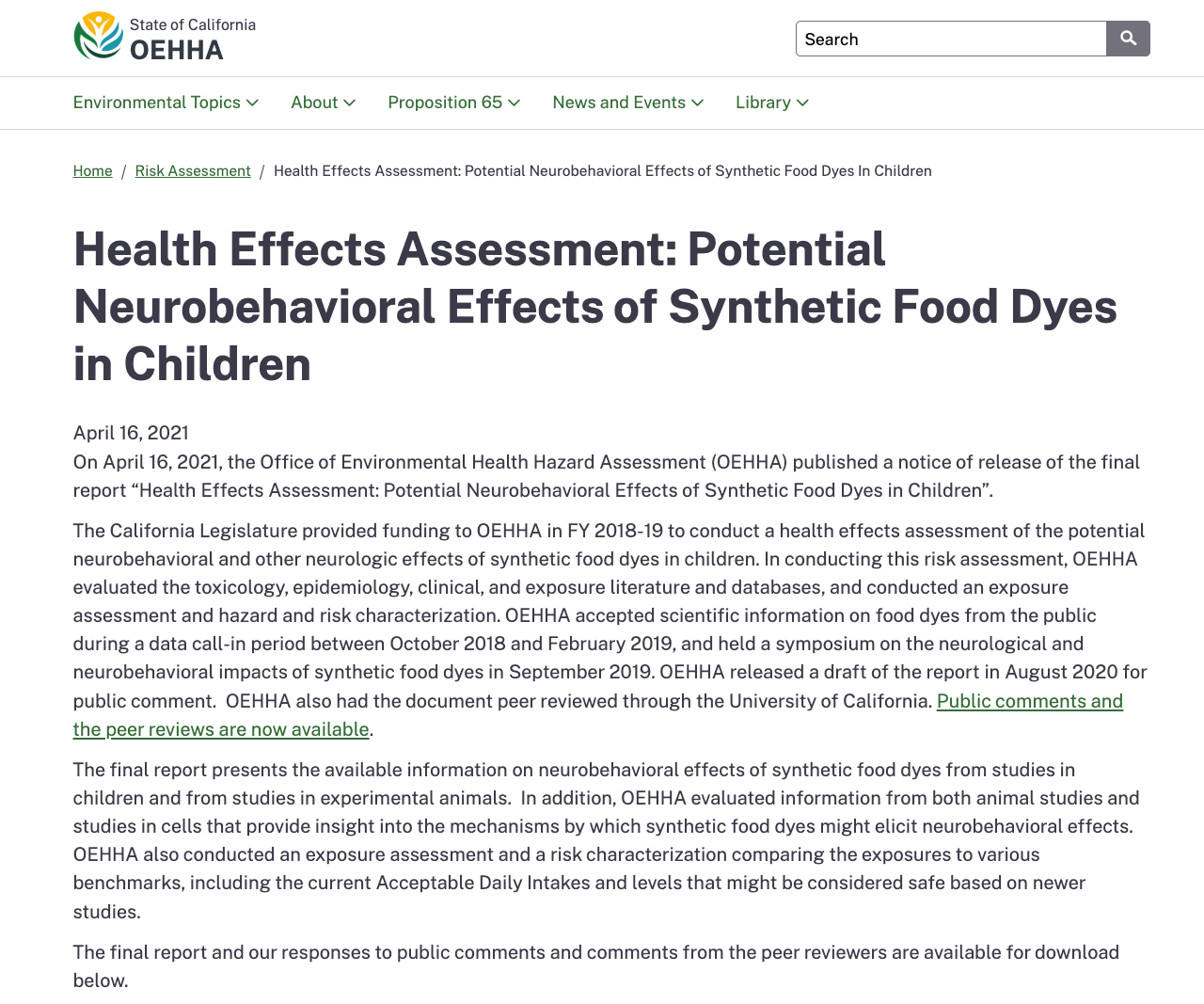
The strongest human evidence on synthetic dyes is actually about children’s behavior. In 2021, California’s Office of Environmental Health Hazard Assessment (a state science agency) published a two-year review built on 27 clinical trials, most of them double-blind, in which children went dye-free for weeks while their behavior was tracked.
Its conclusion: for some children, synthetic dyes are linked to hyperactivity and attention problems, and children vary widely in how sensitive they are. The review also concluded that the FDA’s safe-intake levels, set decades ago, may not fully protect children’s behavior.
That isn’t a cancer finding. But it establishes something important for everything that follows: these dyes are not inert. They interact with the body, which is exactly why researchers went looking at the gut next.
What Red 40 did to the gut (in mice)
The study worth understanding here comes from Dr. Waliul Khan’s lab at McMaster University, published in Nature Communications in 2022. It looked at Red 40 (Allura Red), one of the most common dyes in the food supply.
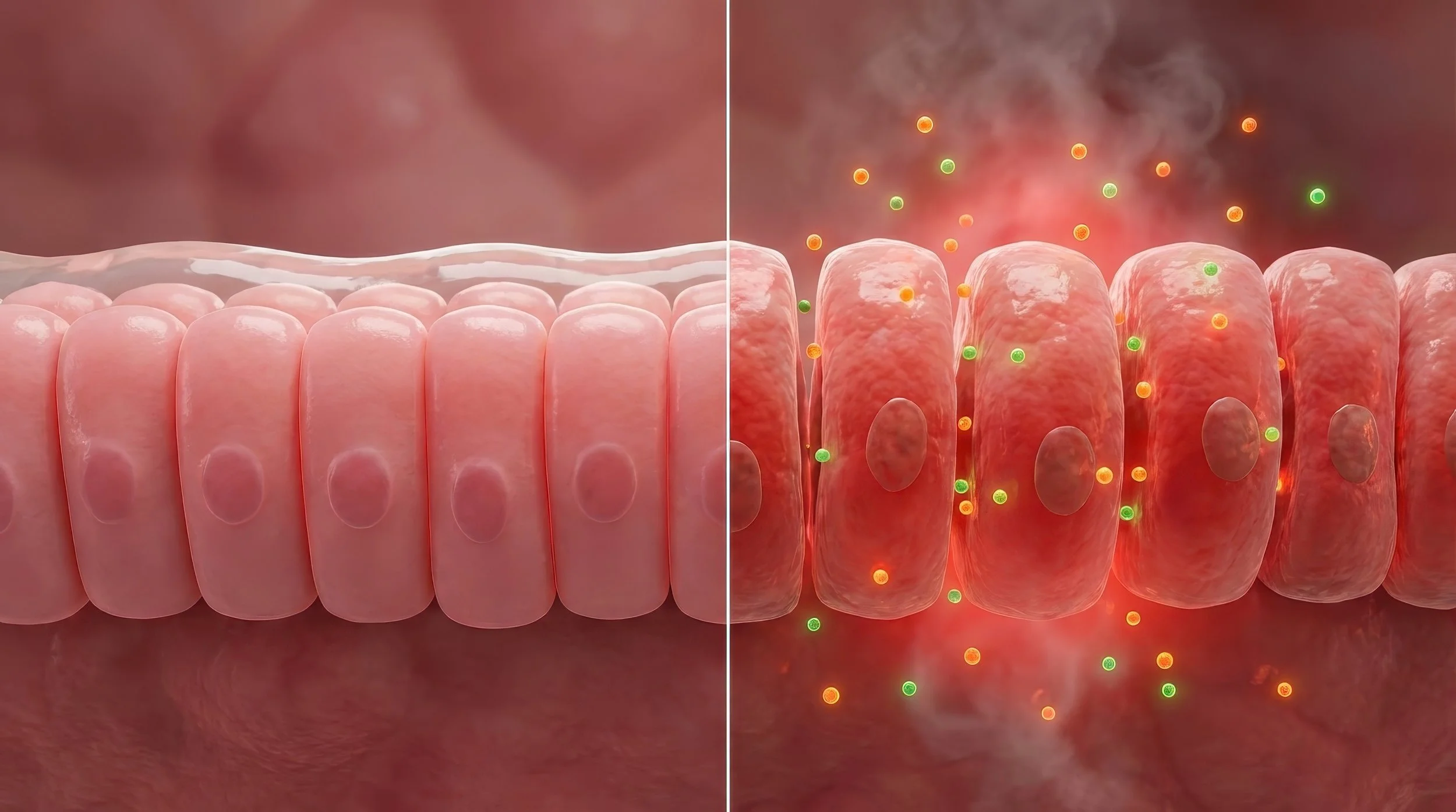
In mice, long-term daily exposure to Red 40 disrupted the gut’s protective barrier, raised serotonin in the gut, shifted the microbiome, and increased susceptibility to colitis, inflammation of the colon. Exposure early in life appeared to prime the animals to be more susceptible later. Khan described the findings as “striking and alarming.”
Context matters, though, and it changes how you should read this. The research was in mice, and the effect depended on chronic, daily exposure. So the takeaway isn’t that one bowl of brightly colored cereal will wreck your gut; it’s that a consistent, habitual pattern of intake is where the likely harm sits. For anyone in treatment, that’s still worth noting: your gut and microbiome are already under stress from therapy, so anything that habitually disrupts the gut barrier is reasonable to factor in.
Do these dyes cause cancer?

The straight answer is that the direct evidence is limited, but concerning.
In the lab, Red 40 has been shown to damage DNA in both human colon cells and mice. When researchers paired a Western-style diet with Red 40, they observed microbiome disruption and low-grade inflammation in the colon. Some of those researchers have noted that the long rise in dye use coincides with the rise in early-onset colorectal cancer in younger adults, but they’re explicit that this is a hypothesis, not proof.
Red 3, the one revoked dye, is often misread. It was pulled because, at high doses, it caused thyroid tumors in rats, and a long-standing law requires the FDA to revoke any additive shown to cause cancer in animals at any dose.
Put together: there isn’t enough evidence to call these dyes a proven cancer-causing boogeyman. But there are enough concerning signals to make avoiding foods that list them an easy, reasonable call.
What to actually do, especially in treatment
Here’s the practical part. These dyes offer no nutritional benefit whatsoever. Combine that with a real, if limited, body of risk signals, and the risk-to-benefit math is straightforward for anyone motivated to optimize their nutrition: there’s little reason to keep them on the plate.
There’s a second, bigger reason to use dyes as a guide. A bright, synthetic color is usually a reliable flag that a food is ultra-processed — and the link between ultra-processed-food-heavy diets, metabolic conditions like obesity, and higher cancer risk is well established. So spotting the dye isn’t really about fearing the molecule; it’s the easiest first step toward a less processed plate, which is where the strong evidence actually lives.
A few simple swaps:
◉ A dyed sports drink becomes fruit-infused water.
◉ Dyed cereal becomes a whole grain with real fruit.
◉ In general: the more vivid and “engineered” a color looks, the more processed the food tends to be — so lean toward naturally colorful, nutrient-dense foods, which also tend to be gentler on a sensitive gut.
For survivors focused on lowering recurrence risk, the evidence is overwhelmingly about the overall pattern — plant-forward and low in ultra-processed food. Dyes aren’t the whole game; they’re just an easy on-ramp to that pattern.
The bottom line
The food dye story isn’t “harmless” and it isn’t “they’re poisoning us.” The behavioral evidence in children is genuinely strong; the gut evidence is real but, so far, animal-based and tied to heavy chronic exposure; and the direct cancer evidence is limited but concerning. Given that these dyes add nothing nutritionally, cutting them is a low-cost, sensible move — and a clean entry point into a less processed way of eating.
If you’d like that done for you — dye-free swaps, meals built to be gentle on treatment side effects, and grocery lists that skip the dyed stuff automatically — that’s what NutriLiv is built to do.
Data at a glance
References
OEHHA, Cal/EPA. Health Effects Assessment: Potential Neurobehavioral Effects of Synthetic Food Dyes in Children. 2021. oehha.ca.gov
Kwon YH, Banskota S, Wang H, et al. Chronic exposure to synthetic food colorant Allura Red AC promotes susceptibility to experimental colitis via intestinal serotonin in mice. Nat Commun. 2022;13:7297. doi:10.1038/s41467-022-35309-y
Zhang Q, Chumanevich AA, Nguyen I, et al. The synthetic food dye, Red 40, causes DNA damage, colonic inflammation, and impacts the microbiome in mice. Toxicol Rep. 2023;11:221–232. PMC10502305
US FDA. FDA to Revoke Authorization for the Use of Red No. 3 in Food and Ingested Drugs. Jan 2025. fda.gov
HHS/FDA. HHS, FDA to Phase Out Petroleum-Based Synthetic Dyes in Nation’s Food Supply. Apr 2025. fda.gov
Lauby-Secretan B, Scoccianti C, Loomis D, et al; IARC Working Group. Body Fatness and Cancer — Viewpoint of the IARC Working Group. N Engl J Med. 2016;375(8):794–798. PubMed 27557308