Green Tea and Cancer: Evidence, Cautions, and What to Look For (2026 Review)
An evidence-based review of green tea and cancer: what peer-reviewed research shows, the cancer-treatment interactions to know, and how to find a quality product.
Green tea has earned its place in the cancer nutrition conversation, and the research behind it is genuinely interesting. Its primary active compound, EGCG, has been studied extensively for effects on cellular pathways that matter in cancer biology, and human studies link regular green tea consumption to measurable differences in cancer rates across populations. This article covers what the research shows, the specific cancer-treatment interactions to know about, and how to identify a green tea product that delivers what the label claims.
Key Takeaways
◉ Green tea's anti-cancer research centers on a family of plant compounds called catechins, particularly EGCG (epigallocatechin gallate), which has been shown in laboratory studies to trigger programmed cell death in cancer cells, interfere with the blood vessel formation tumors need to grow, and block signaling pathways that cancer cells use to multiply.
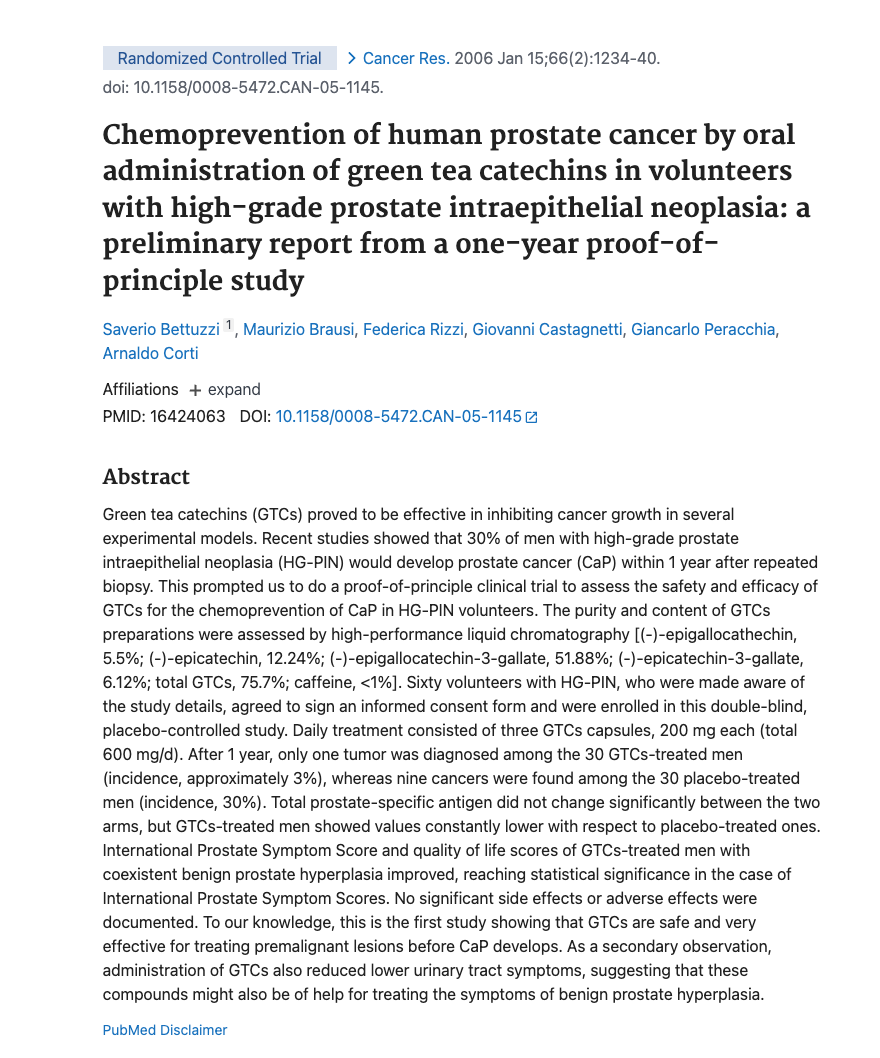
◉ A randomized trial published in Cancer Research found that men with precancerous prostate lesions who took green tea catechins had significantly less progression to prostate cancer than men who took placebo.
◉ Multiple large meta-analyses have linked regular green tea consumption, typically three or more cups per day, to reduced incidence of several cancers, with the most consistent signals for breast and prostate cancer.
◉ EGCG can bind to bortezomib (Velcade) and reduce its activity in laboratory studies; patients receiving bortezomib for multiple myeloma should consult their oncology team before consuming green tea or EGCG supplements. Patients on tamoxifen should also discuss regular green tea use with their care team.
◉ High-dose EGCG extract supplements have been associated with rare cases of liver injury, particularly when taken on an empty stomach. The strongest evidence base, and the better safety profile, supports brewed tea, not concentrated extracts.
◉ Look for green tea products with publicly verifiable credentials such as USDA Organic certification, Rainforest Alliance certification, or, for supplements, USP Verified or NSF Certified seals, all of which can be verified on the certifying body's public directory.
What's in green tea, and why it matters for cancer research
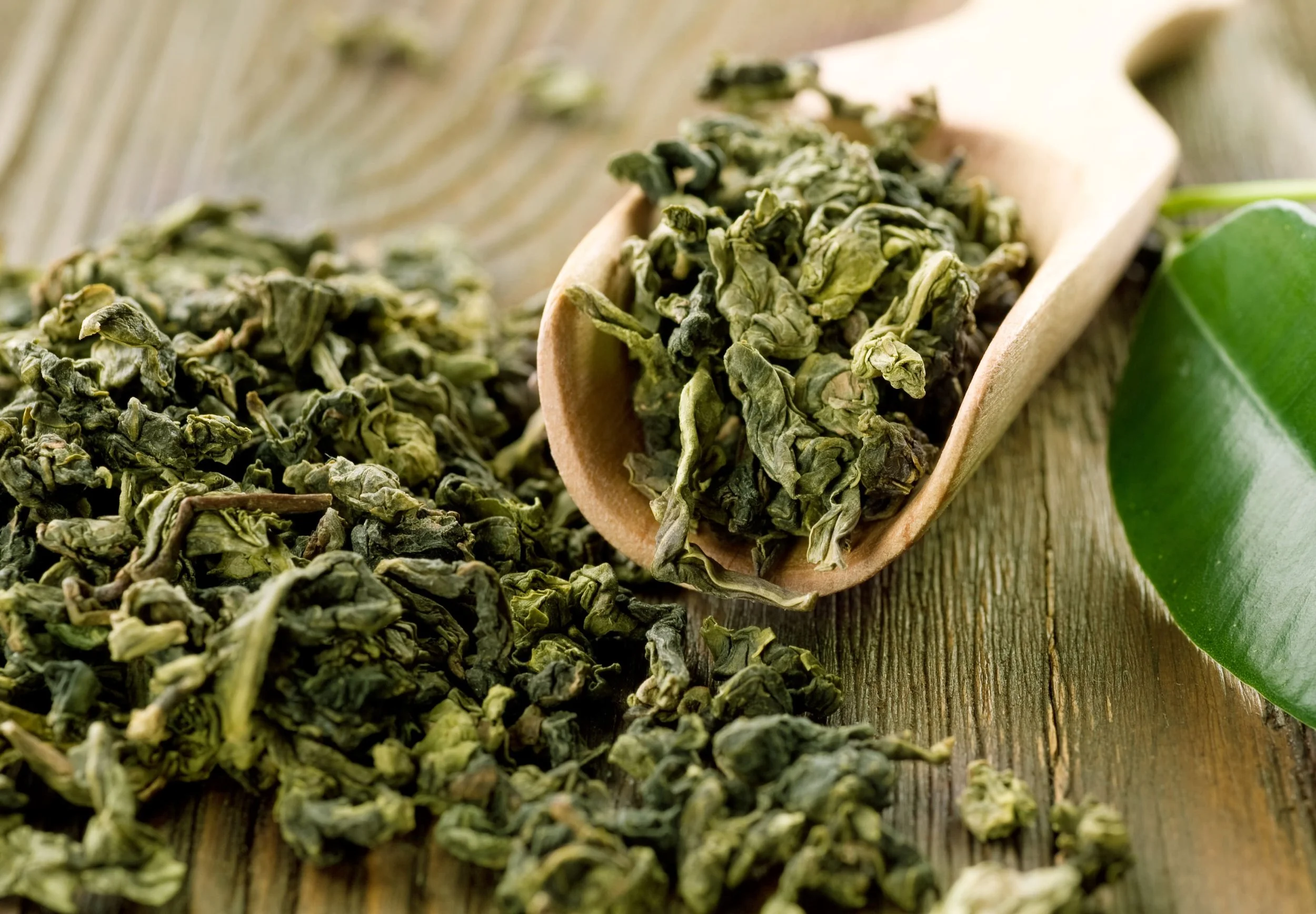
Green tea is made from the lightly steamed leaves of Camellia sinensis, the same plant that produces black and oolong tea. The steaming process preserves a family of antioxidant plant compounds called catechins, which are present at higher concentrations in green tea than in more processed teas. The most-studied catechin is EGCG (epigallocatechin gallate), and it's the compound at the center of nearly all the cancer research on green tea.
In laboratory studies, EGCG has been shown to do several things that are biologically relevant to cancer. It triggers apoptosis, programmed cell death, in cancer cells. It inhibits angiogenesis, the formation of new blood vessels that tumors need to grow beyond a small size. And it interferes with cellular signaling pathways including NF-κB and PI3K/Akt, both of which cancer cells use to keep multiplying. EGCG has also been shown to affect epigenetic regulators that influence how genes get switched on and off in tumor cells.
These are preclinical findings, meaning they come from experiments in cells and animal models rather than from human trials. They establish the biological plausibility for why green tea has been studied so extensively in human cancer research, even if the mechanisms in a petri dish don't translate one-to-one into a person drinking tea.
What the human evidence shows
A randomized controlled trial published in Cancer Research in 2006 followed men with high-grade prostatic intraepithelial neoplasia, precancerous lesions in the prostate, and gave half of them green tea catechins and half a placebo. At one year, the men taking green tea catechins had significantly less progression to prostate cancer. That's a real signal from a real human trial, in a population specifically at elevated risk.
Multiple large meta-analyses of observational data have linked regular green tea consumption to reduced incidence of several cancers. The threshold most consistently associated with measurable effects is three or more cups per day. The signals are strongest and most consistent for breast and prostate cancers; meaningful associations have also been observed in some populations for colorectal and gastric cancers. Observational data alone cannot establish that green tea caused the differences in cancer rates. Populations who drink green tea regularly differ from those who don't in other ways. But the consistency of the signal across multiple large studies, combined with the mechanistic plausibility from the laboratory work, makes green tea one of the better-supported beverage choices for someone looking to make evidence-based nutritional decisions.
Trials of concentrated EGCG extracts have shown more variable findings than studies of brewed tea consumption, and this pattern is worth understanding. The compounds in a cup of brewed tea are absorbed differently than the same compounds in a high-dose capsule. The strongest evidence base, and, as we'll discuss below, the safest one, supports the beverage.
Evidence at a glance
Evidence strength reflects the state of research at the time of this review. Evidence does not establish that green tea treats, cures, or prevents any cancer.
Cautions for patients in active treatment
Green tea has real evidence behind it for general use, but two cancer-treatment interactions are worth knowing about, and one supplement-form concern matters for anyone considering high-dose extracts.
Bortezomib (Velcade).
This drug is a standard-of-care treatment in multiple myeloma. Laboratory research has demonstrated that EGCG can bind directly to bortezomib and reduce its ability to do its job. For patients receiving bortezomib, this is a clear conversation to have with the oncology team before adding green tea, matcha, or any EGCG-containing supplement to a regular routine. The interaction is well-documented enough that most integrative oncology resources, including Memorial Sloan Kettering's About Herbs database, flag it as a specific concern.
Tamoxifen.
Tamoxifen is used in some hormone-receptor-positive breast cancers. Preclinical research has suggested that green tea catechins may affect tamoxifen metabolism through interactions with the liver enzymes responsible for activating and clearing the drug. The clinical significance is less established than with bortezomib, but it's enough that patients on tamoxifen should mention regular green tea consumption to their care team so the team can weigh in on what's appropriate for their specific situation.
High-dose EGCG extract supplements.
Case reports in the medical literature have documented liver injury in people taking concentrated EGCG supplements, particularly at high doses and on an empty stomach. The US Pharmacopeia convened an expert panel to review the safety data and the cases are catalogued in the NIH LiverTox database. The cases are uncommon, but they are real, and the pattern is consistent enough that the strongest evidence base for green tea, and the safer one, supports the beverage rather than the megadose capsule. For patients tempted to go all-in on EGCG supplements thinking more is better, the research does not support that approach.
Sources for these cautions include the Memorial Sloan Kettering About Herbs database, the NIH Office of Dietary Supplements, peer-reviewed pharmacology research, and the National Cancer Institute PDQ summaries.
What to look for when buying green tea
Not all green tea products deliver what the research is built on. Independent testing has surfaced a few patterns worth knowing about.
EGCG content varies dramatically across products.
Some bagged green teas have been found to deliver only a small fraction of typical catechin levels. In some cases, less than ten percent of what you'd expect from a properly brewed cup. The label may say green tea, but the active compound content can fall far short. This appears to vary by leaf source, processing, freshness, and the material the bag itself is made from.
Heavy metals can accumulate in tea leaves.
Tea plants pull lead and arsenic from soil. Most products test at acceptably low levels, but some have come in above California's Proposition 65 reproductive-harm threshold of 0.5 micrograms of lead per serving. For someone drinking multiple cups a day during a multi-year treatment course, the cumulative exposure is worth being aware of.
Tea bag materials matter.
Some products use bags containing plastic fibers. Beyond microplastic concerns, there's evidence the material can bind to catechins and reduce what actually extracts into the cup. Nothing on the box would tell you any of this.
The way to navigate this is to look for credible third-party verification. USDA Organic certification addresses pesticides and certain contamination concerns, and it's verifiable on the USDA Organic Integrity Database. Rainforest Alliance and Fair Trade Certified signal sourcing and quality standards. For green tea supplements, the strongest credentials are USP Verified and NSF Certified, both of which verify that what's in the bottle matches what's on the label and that contaminants fall within acceptable limits. All of these credentials are listed on the certifying body's public directory and can be verified directly.
For matcha, sourcing matters more than for bagged tea: ceremonial-grade matcha from established Japanese suppliers tends to perform better in independent testing than lower-grade culinary matcha.
Where the evidence lands
Green tea has earned its place in the cancer nutrition conversation, and the research behind it is genuinely supportive. EGCG triggers programmed cell death in cancer cells in laboratory studies, interferes with the blood vessel formation tumors require, and has been linked in both randomized human trials and large population studies to better cancer outcomes. For most people, choosing green tea over sugary drinks is a meaningfully evidence-supported choice, and for many patients and survivors, incorporating two to three cups a day as part of an overall nutritious diet is a reasonable, well-grounded habit.
That said, green tea isn't right for everyone. If you're being treated with bortezomib for multiple myeloma, the interaction is real and the conversation with your oncology team comes first. If you're on tamoxifen, your team should know about regular green tea use. And if you're tempted by high-dose EGCG capsules, the evidence and the safety data both point you back toward the beverage.
Anyone in active treatment thinking about making green tea a regular habit should mention it to their oncology team. Not because it's dangerous for most people, but because your care team is the only one who can tell you whether your specific treatment plan changes what's appropriate for you.
References
1. Bettuzzi S, Brausi M, Rizzi F, et al. Chemoprevention of human prostate cancer by oral administration of green tea catechins in volunteers with high-grade prostate intraepithelial neoplasia: a preliminary report from a one-year proof-of-principle study. Cancer Res. 2006;66(2):1234-1240. https://pubmed.ncbi.nlm.nih.gov/16424063/
2. Yang CS, Wang H. Cancer preventive activities of tea catechins. Annu Rev Pharmacol Toxicol. 2018;58:443-465. https://pmc.ncbi.nlm.nih.gov/articles/PMC6273642/
3. Golden EB, Lam PY, Kardosh A, et al. Green tea polyphenols block the anticancer effects of bortezomib and other boronic acid–based proteasome inhibitors. Blood. 2009;113(23):5927-5937. https://pubmed.ncbi.nlm.nih.gov/19190249/
4. Sarma DN, Barrett ML, Chavez ML, et al. Safety of green tea extracts: a systematic review by the US Pharmacopeia. Drug Saf. 2008;31(6):469-484. hhttps://pubmed.ncbi.nlm.nih.gov/18484782/
5. Hernandez LM, Xu EG, Larsson HCE, et al. Plastic teabags release billions of microparticles and nanoparticles into tea. Environ Sci Technol. 2019;53(21):12300-12310. https://pubmed.ncbi.nlm.nih.gov/31552738/
6. Memorial Sloan Kettering Cancer Center. About Herbs: Green Tea. https://www.mskcc.org/cancer-care/integrative-medicine/herbs/green-tea
7. National Cancer Institute. PDQ Complementary and Alternative Medicine summaries. https://www.cancer.gov/about-cancer/treatment/cam
8. NIH Office of Dietary Supplements. Dietary supplement fact sheets. https://ods.od.nih.gov/factsheets/
9. NIH LiverTox database. Green tea entry. https://www.ncbi.nlm.nih.gov/books/NBK548858/